Physiotherapy at home after hospital
Home visits across the Isle of Wight
Being home again can raise questions about what you can manage. If walking or getting out of a chair is harder since your hospital stay, we can assess you at home and agree a plan for your recovery.
Free suitability chat. No obligation.
Any home visit is agreed with you afterwards.
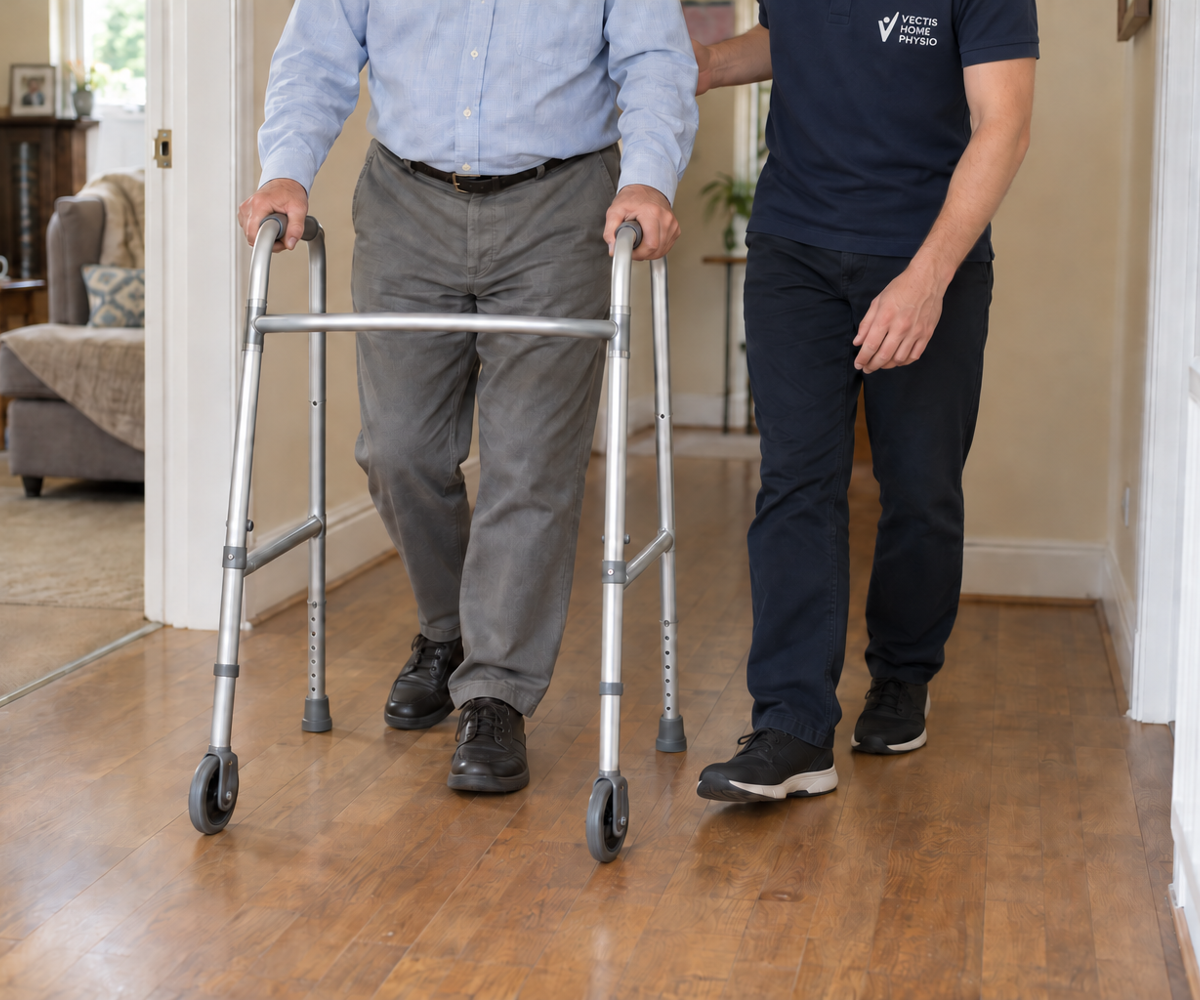
Working on walking at home after a hospital stay.
Finding your feet
back at home
Hospital discharge is a change of setting, and you may still need help with movement. We look at how things are going in your own home, using your discharge advice to guide what happens next.
Getting around familiar rooms
The walk from your bed to the bathroom may feel longer than it used to. We can assess the movements and walking you need for daily life, including with any equipment you've come home with.
Building activity back up
After illness or a less active spell, everyday tasks can take more effort. We agree a manageable starting point together, then fit rest and practice around how you're feeling.
Using your home setup
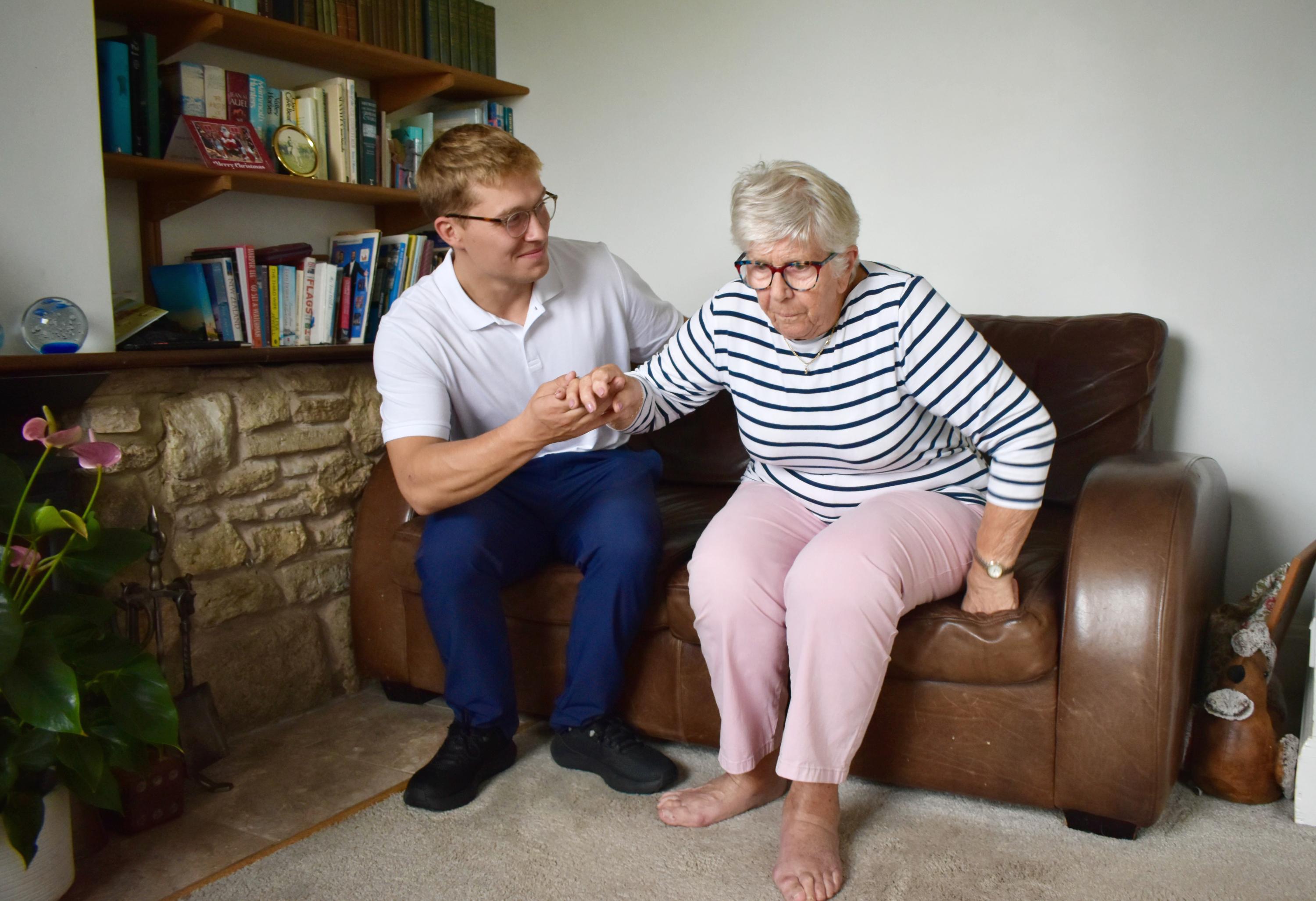
We can look at getting in and out of your usual chair, or managing a step where that's appropriate. Advice is based on your actual home and any precautions your hospital team has given you.
Making sense of the exercise plan
If you've been given exercises, we can watch you do them and talk through anything unclear. Any changes take account of why you were in hospital and what you can do now.
“The home visit was super helpful because one of my issues was due to the fact I had the saddle too high on my exercise bike. Had I visited a clinic, this would not have been picked up as easily.”
Support when recovery
continues at home
This service may suit someone who's home after illness or a hospital admission and wants help with movement. We talk through your circumstances before agreeing a visit.
- You feel weaker or tire more quickly during everyday tasks.
- Walking at home is harder than it was before your admission.
- You're not sure how to carry on with your rehabilitation plan.
- Your family has noticed you need more help moving around.
Physiotherapy is about movement and rehabilitation. If you need nursing, help with personal care or a wider care package, speak to your discharge team, GP or social care service. A physiotherapy visit doesn't replace that support.
Your recovery,
one step at a time
Understand your discharge advice
We ask why you were in hospital and what's changed since you came home. If you have a discharge summary, exercise sheets or advice about precautions, please keep them handy.
See how you manage at home
We assess the everyday movements that are relevant to you and ask which activities matter most. That might be getting from bed to chair. Or walking far enough to make a cup of tea.
Agree a practical next step
Your exercise and rehabilitation plan is based on the assessment and any instructions from your treating team. We discuss what you can practise, with support where you need it.
Review as your needs change
At follow-up visits we look at how you're managing and adjust the plan if needed. With your consent, we can share relevant information with other professionals involved in your care.

Meet our founder,
Jacob
His experience helps shape our approach to care at home.
He has an MSc in Physiotherapy and has worked in NHS hospital and community rehabilitation teams. His training also included falls services.
At Vectis, we focus on how you manage at home and what you’d like to do more easily. You can ask questions and have a say in decisions about your treatment throughout.
More about Jacob’s qualifications and experienceArranging support
for a relative
You can contact us while a relative is still in hospital to talk about support after discharge. Whether we can visit depends on their needs, the discharge arrangements and our availability. We can't confirm that someone is ready to leave hospital.
The person having treatment stays involved in decisions about their care. With their agreement, family or carers can join the conversation and talk about how to support the plan between visits. Updates are shared with consent.
How family enquiries workFees and
home visits
The first conversation about suitability is free.
- Initial home assessmentIncluding your exercise and rehabilitation plan.
- £80
- Follow-up home visit
- £70
Home visits are available anywhere on the Isle of Wight, with no separate mileage fee. Contact us about suitability and current availability.
Questions about recovery after hospital
Still have a question?
Ask us by email.
How soon after discharge can you visit?
Let us know the expected or actual discharge date. Timing depends on your needs, any hospital instructions and our availability. We'll agree the visit with you, and we won't promise a fixed turnaround.
Is this the same as reablement?
Reablement usually means short-term support to help someone manage daily life again after illness or a hospital stay. It can involve several professions and include help with personal care. Vectis provides private physiotherapy, which is one part of rehabilitation. We don't provide the whole reablement service.
Can I have private physiotherapy alongside NHS support?
Tell us about any NHS therapy or other support you're getting, and we can discuss how private visits might fit alongside it. With your agreement, the professionals involved can talk to each other, which helps avoid conflicting advice.
What should I have ready for the first visit?
Keep any discharge information and exercise sheets nearby, along with any advice you've been given. Use your usual walking aids and equipment. There's no need to try out difficult movements before we arrive.
How many appointments will I need?
We discuss this after your assessment, based on what you want to work towards. Recovery varies, so we keep checking whether more visits are still useful. We can't promise a recovery date or a fixed number of sessions.
What if my health gets worse after discharge?
Follow the contact advice in your discharge information, or get help from your GP or NHS 111. In an emergency, call the emergency services. If you need medical help, don't wait for a reply from us about routine physiotherapy.
Further reading
Ask us about
a home visit
Tell us what has become harder and where on the Island you live. You can ask for yourself or for someone else.
The first conversation is free. Sending a message starts an enquiry, and an appointment is arranged with you afterwards.
Prefer to use the website? Send an enquiry.Or send a message
Your name, who it’s for and a way to reply are enough to start.
Thank you. Your message is on its way to us.
Nothing is booked until you’ve talked and agreed it’s the right fit.
Sorry, your message didn’t send. Please try again, or message us onWhatsApp or emailinfo@vectishomephysio.co.uk.